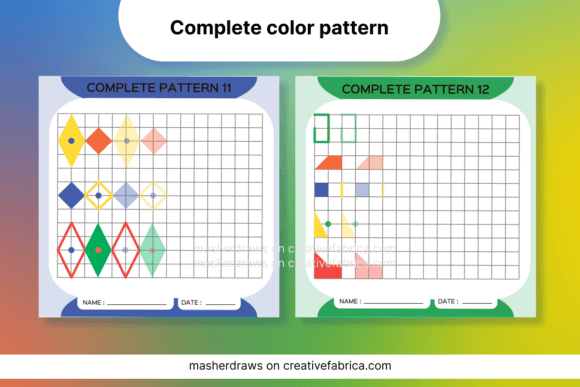
Kids Activity Trace Color Pattern 11-12: A Creative Design Asset
More Than a Worksheet: The Visual Appeal of Pattern 11-12
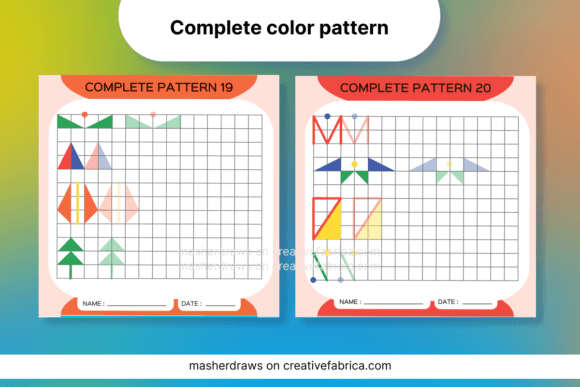
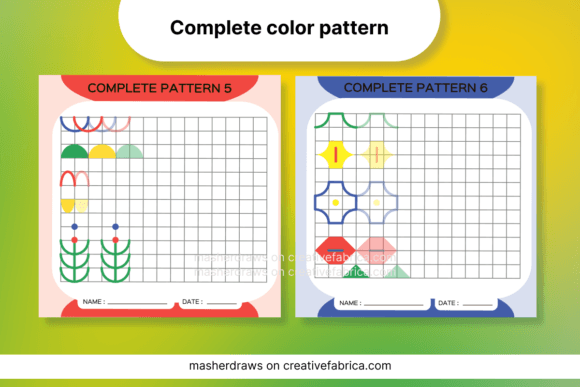
When you first look at the Kids Activity Trace Color Pattern 11-12, it’s easy to see it as just a set of printable worksheets. But for the creative professional, it’s a thoughtfully designed design asset with a distinct personality. The visual characteristics are rooted in simplicity and encouragement. The tracing lines are bold and clear, providing a confident path for small hands to follow. The shapes are fundamental—circles, squares, triangles, and stars—rendered in a clean, friendly style. This isn’t a complex serif font or an ornate script font; it’s a foundational visual language built for clarity and success. The overall appeal is one of warmth, support, and playful learning. It feels less like a rigid educational tool and more like an invitation to create, making it a surprisingly versatile piece for projects aimed at families, education, and early childhood brands.
Practical Applications for Designers and Entrepreneurs
The true value of a resource like Kids Activity Trace Color Pattern 11-12 lies in its real-world application. For designers working in the education sector, this is a ready-made asset for creating branded activity packs, welcome kits for daycare centers, or interactive elements for a pediatric clinic’s website. Entrepreneurs launching a children’s product line can use the patterns as inspiration for packaging design, where the simple shapes can become part of a cohesive brand identity. The included high-resolution JPEG and PNG files (4000x4000px) are perfect for social media graphics or web design elements, allowing for crisp visuals in digital ads or blog posts about homeschooling resources. Marketers can leverage the “Print and use!” and “Laminate all sheets!” messaging to promote a product as durable and user-friendly, appealing directly to busy parents and educators. For bloggers and content creators in the parenting niche, it’s a tangible freebie or bonus that adds immediate value to their audience, enhancing engagement and trust.
Influencing Perception and Engagement in Your Projects
Integrating elements from the Kids Activity Trace Color Pattern 11-12 does more than fill space; it influences how your audience perceives and interacts with your work. In editorial design for a family magazine, using these patterns as background textures or sidebar graphics establishes a visual hierarchy that is approachable and non-intimidating. It signals that the content is family-friendly and accessible. For a logo design or brand system targeting young families, the shapes can be stylized and incorporated as brand marks, fostering instant recognition and a sense of playful professionalism. The consistency of the pattern across multiple touchpoints—website, printable guides, social media—builds a coherent brand experience that parents will come to trust. The act of tracing and coloring itself is a metaphor for guidance and support, a subtle but powerful message that can enhance audience engagement by making your brand feel like a helpful partner in the parenting journey.
Making the Right Choice for Your Creative Project
Choosing to use a resource like Kids Activity Trace Color Pattern 11-12 requires a practical evaluation. First, consider the project fit. Is your audience primarily parents of toddlers, preschool teachers, or homeschooling families? If yes, the style is a natural match. Test it by placing the pattern elements alongside your primary typeface. Does it complement a clean sans serif font for body text, or does it pair better with a rounded, friendly handwritten font for headings? The simplicity of the patterns makes them excellent for font pairing experiments without causing visual clutter. Review the included styles—the two original pages offer variety for different activities, which is great for creating a multi-page booklet or a series of social posts. For readability, remember these are activity guides, not body text fonts; their strength is in guiding action, not conveying paragraphs of information. Finally, for commercial use, the provided files suggest a focus on digital and print reproduction, making them suitable for most small business and educational commercial projects where the end product is the printed worksheet or digital graphic. Always ensure your final use aligns with the intended purpose of supporting early childhood development through creative play.